
Inspectors found Staffordshire's response to child sexual abuse in the family fast at the front door, then inconsistent. An action plan is due by 12 November.
Staffordshire’s safeguarding partnership has until 12 November to tell Ofsted what it will do about the findings of a joint inspection.
Four inspectorates spent the week of 15 to 19 June looking at how councils, police, health services and probation in Staffordshire respond to child sexual abuse inside the family. Their letter was published on 6 August. It found a first response that is usually quick and effective, and a system after that first response which is not consistent enough.
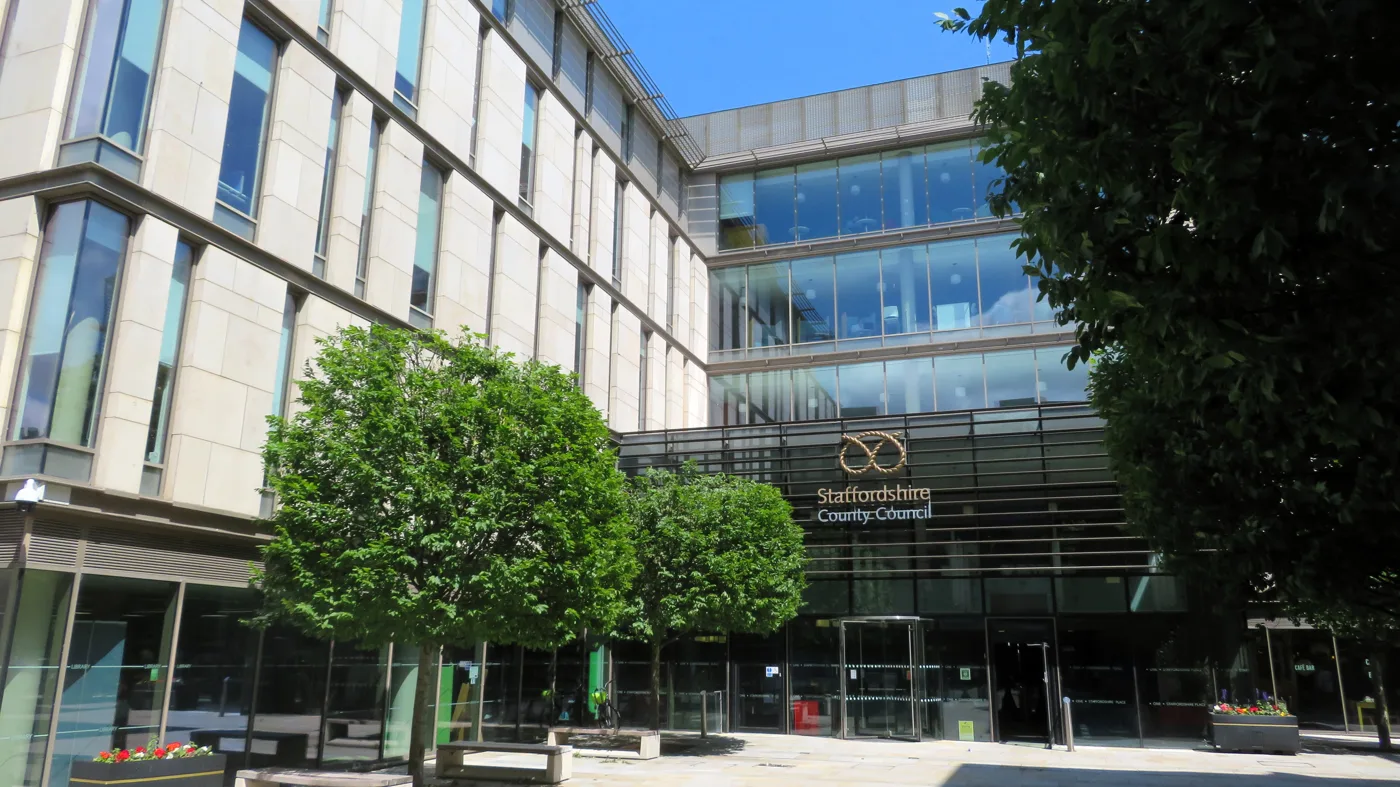
This matters in Stafford for a plain reason. The authority inspected is Staffordshire County Council, whose children’s services are run from Staffordshire Place on Tipping Street, and it is the child protection authority for every family in the borough.
What inspectors found
The headline finding is that when a child shows signs of, or discloses, sexual abuse at home, Staffordshire’s integrated front door responds in a timely and effective way “in the majority of situations”. Practitioners follow up behaviour that might indicate sexual harm rather than letting it pass.
After that, the letter says, it varies. Some children get “a more comprehensive and proactive approach than others”. The variation is in the strength of assessments, in safety planning, and in whether information reaches the people who need it.
Inspectors set out six things that must improve:
- the pace of putting a clear partnership strategy in place
- greater analysis of data and performance information, so resources can be targeted
- consistent information-sharing, particularly over when to call a strategy meeting and how quickly minutes are shared
- safety planning, which relies too often on one named parent being treated as protective and is not routinely shared with early years settings
- workforce capacity, so staff can actually take up the multi-agency training on offer
- naming the abuse, because child sexual abuse in the family “is not always named and is therefore not always given sufficient focus”
The finding that is hardest to read
That last point is not a wording quibble. The letter carries a practice study of two families where sexual abuse was clearly disclosed. Agencies acted, removing the perpetrators from the home and stopping contact.
But at the child protection conferences that followed, the children were placed on plans for neglect or emotional abuse, not sexual abuse. Inspectors called that “a misrepresentation of their experience”, said it prevents partners from understanding the full nature of the abuse, and added that it left “some children feeling not believed”.
Managers’ own summaries showed the same habit. The letter notes team manager summaries that describe “concerns about inappropriate behaviour” rather than naming what was suspected.
What is working
The inspectorates were clear that this is not a failing system. Their strengths list includes the chief executive and director of children’s services driving the work personally, a consistent emphasis on capturing the child’s voice, and the co-location of most partner agencies in the integrated front door.
They also singled out:
- most police investigations, described as timely and of good quality with meaningful supervisory reviews
- the role of schools, which “know children well” and advocate for them in multi-agency planning
- “silent exclusion zones” on offender licences, where the victim’s address is not written on the licence but a GPS tracker sounds if the offender enters the area
- commissioned voluntary sector support, including advocates and counsellors working with children before a court hearing that “sometimes takes several years”
Some fixes happened during the inspection itself. Leaders directed that the sexual assault referral centre be included in out-of-hours strategy meetings where family sexual abuse is suspected or known.
Where this sits in a longer run of inspections
This is the third piece of Ofsted activity in Staffordshire in under three years, and the direction has been upward.
- November 2023: a full inspection of children’s services graded the council requires improvement to be good overall, with services for children in care rated good.
- December 2025: a focused visit found the 2023 concerns about the front door had been addressed, and that a new director had “significantly improved front door services for children”. Inspectors also noted councillors had agreed significant extra funding.
- June 2026: this joint inspection, which found the front door working and the follow-through inconsistent.
The letter is candid about why progress across the wider partnership has been slower: “changes in personnel, restructures and amalgamations”, alongside “broad public sector and local government reforms”. Stafford borough was itself due to be absorbed into a new South and Mid Staffordshire unitary council in April 2028, a plan the government paused on 7 September 2026.
What the partnership says
Bernie Brown, director of children’s services and chair of the delegated safeguarding partnership executive group, said: “We accept the findings and are already acting on them, including improving information sharing, strengthening consistency and moving forward with our partnership strategy, so children receive the right support and protection.”
Nick Lakin, cabinet member for children and young people at the county council, said: “This inspection gives us a clear direction for further improvement.”
Chief Superintendent Sally Blaiklock, of Staffordshire Police’s public protection unit, said the findings “recognise the commitment of safeguarding professionals across Staffordshire”.
A standalone partnership group on child sexual abuse in the family environment started work in February 2026, and a strategy shaped with survivors and specialist organisations is being finalised.
What it means for you
- The deadline is real and dated. The chair of the safeguarding partnership must send a written statement of proposed action to Ofsted by 12 November 2026. It has to be a multi-agency response, and it will shape what inspectors look at next time.
- If you are worried about a child, the front door is the part inspectors rated well. The Staffordshire Families Integrated Front Door takes concerns on 0300 111 8033, Monday to Thursday 8.30am to 5pm and Friday 8.30am to 4.30pm, and 0345 604 2886 outside those hours. If a child is at risk of immediate harm, call 999 first.
- You can read the letter yourself. It is thirteen pages, written as a public letter to the partnership, and it names no children or families.
- We will report the statement of action when it is published.
Sources
- Joint targeted area inspection of Staffordshire, Ofsted, the Care Quality Commission, HMICFRS and HMI Probation, inspected 15 to 19 June 2026, letter published 6 August 2026. All findings, quotations and the 12 November deadline are taken from that letter, which is linked from the provider page above.
- The same Ofsted page carries the inspection of Staffordshire children’s services of 6 to 10 November 2023, for the requires improvement grades, and the focused visit letter of 27 January 2026, for the December 2025 findings.
- Inspection recognises strong partnership work to keep children safe in Staffordshire, Staffordshire County Council, 6 August 2026, for the partnership’s response.
- Report a concern about a child, Staffordshire County Council, for the front door numbers and hours.
Have your say