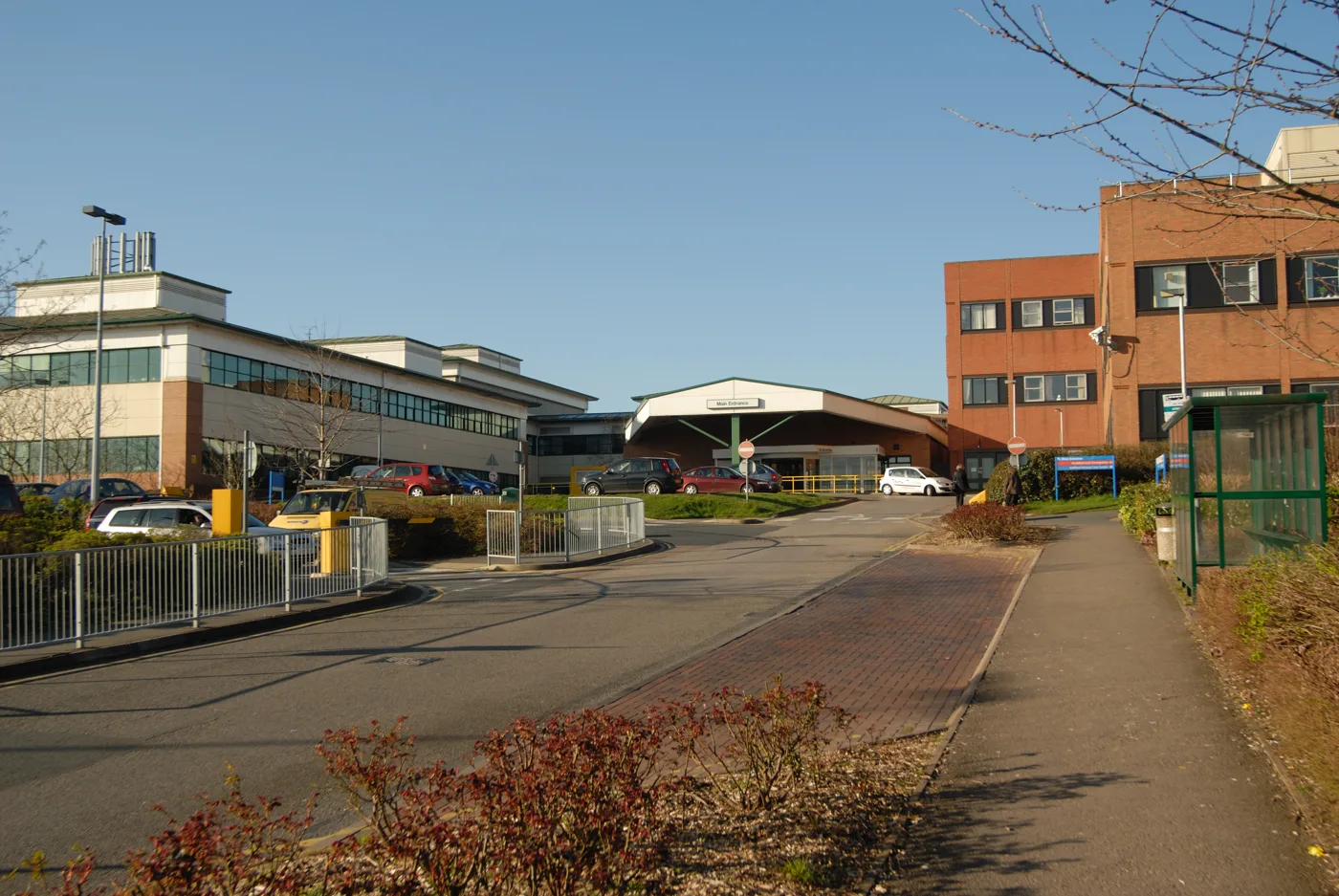

County Hospital's midwife-led birth unit, shut since March 2020, will not reopen. It averaged eight births a month. Antenatal and postnatal care stay.
Babies will no longer be born at County Hospital in Stafford. The NHS has decided to make permanent the closure of the hospital’s freestanding midwife-led birth unit, which has not taken a birth since the start of the pandemic in March 2020.
The same decision covers the unit at Samuel Johnson Community Hospital in Lichfield, about 15 miles south-east as the crow flies.
The recommendation went to the joint boards of NHS Staffordshire and Stoke-on-Trent and NHS Shropshire, Telford and Wrekin at their public meeting on Thursday 24 September. That meeting was held at the Beaconside Group offices on Stafford Enterprise Park. The decision-making business case is in the meeting papers (item 15). The Local Democracy Reporting Service has reported that the boards approved it. The integrated care board (ICB) has not yet published a statement or the minutes, and its own birthing services page still says no decision has been made.
What stays in Stafford
Antenatal and postnatal appointments carry on at County Hospital, as they have throughout the closure. Nothing about those changes.
Women who would have chosen the Stafford unit are offered, according to the business case:
- a midwife-led birth at Royal Stoke University Hospital or Queen’s Hospital, Burton
- a consultant-led birth at either of those hospitals
- a home birth
Home births were also suspended in 2020. Both trusts began booking women in for them again from 1 April 2024, the papers say.
Why the NHS says the unit cannot reopen
The case rests on three numbers from the board papers.
Eight births a month. That was the County Hospital unit’s average in 2019/20, its last full year. Lichfield’s averaged 18. A review of County Hospital’s maternity services by the Trust Special Administrator recommended that a unit should handle at least 350 births a year to be clinically and financially viable.
12.15 midwives per unit. That is the minimum number of experienced Band 7 midwives (full-time equivalent) needed to staff each unit around the clock, with two midwives present at every birth. Both trusts have filled most of their posts. The papers say a share of the new recruits are still newly qualified and in supervised training, so the trusts cannot staff the freestanding units as well as Royal Stoke and Burton.
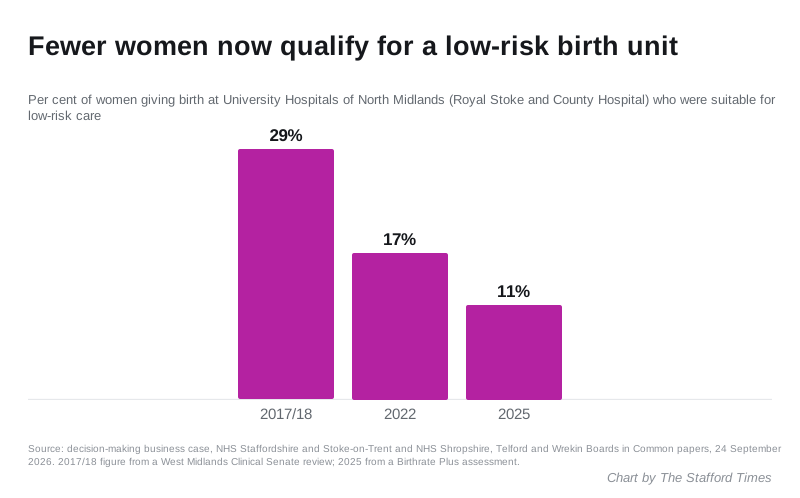
11% of births are low-risk. Freestanding units take low-risk pregnancies only, because there is no doctor, epidural or neonatal care on site. At University Hospitals of North Midlands, which runs Royal Stoke and County Hospital, just under 11% of women who gave birth in 2025 were suitable for low-risk care. In 2022 it was 17%, and in 2017/18 it was 29%.
Across Staffordshire and Stoke-on-Trent there are about 10,500 births a year. The ICB estimates that around 1,155 of those pregnancies are low-risk.
What people said
The public consultation ran from 12 May to 3 August 2025. It drew 1,403 completed surveys. A further four weeks of engagement ran in February 2026, mainly about clinics at Lichfield.
The papers record three main themes in the feedback:
- travel, especially for people on low incomes or without a car
- choice, with many wanting to keep a midwife-led option close to home
- pressure on other hospitals, and whether Royal Stoke and Burton have room
The NHS’s own travel analysis found that women who used the freestanding units would face journeys about 14 minutes longer on average. Across all women, the increase was about six minutes. The board papers say the impact on “a small cohort” is outweighed by having midwives, doctors and neonatal care on one site.
What it means for you
- If you are pregnant and live in the Stafford area, your antenatal and postnatal checks still happen at County Hospital. Your midwife will discuss where to give birth: Royal Stoke, Queen’s Hospital Burton, or at home.
- If you want a midwife-led birth, Royal Stoke and Burton both have midwife-led units alongside their labour wards. The ICB’s where to have your baby page sets out the options.
- If you rely on public transport, raise it with your midwife early. Travel was the biggest concern in the consultation.
- Lichfield only: glucose tolerance tests and anti-D clinics stay at Queen’s Hospital, Burton, rather than returning to Samuel Johnson.
The ICB’s next public board meeting should carry the minutes of 24 September. We will add the formal record of the decision when it is published.
Sources
- Boards in Common meeting papers, 24 September 2026, item 15 and the Strategic Commissioning and Transformation Committee report of 8 July 2026
- Birthing services at midwife-led units, Staffordshire and Stoke-on-Trent ICS
- ICB board meetings page
Have your say