

55 trees logged so far, two of them yews put at about 400 years: the Big Gnosall Tree Count launched at St Lawrence Church on 11 October. How to add yours.
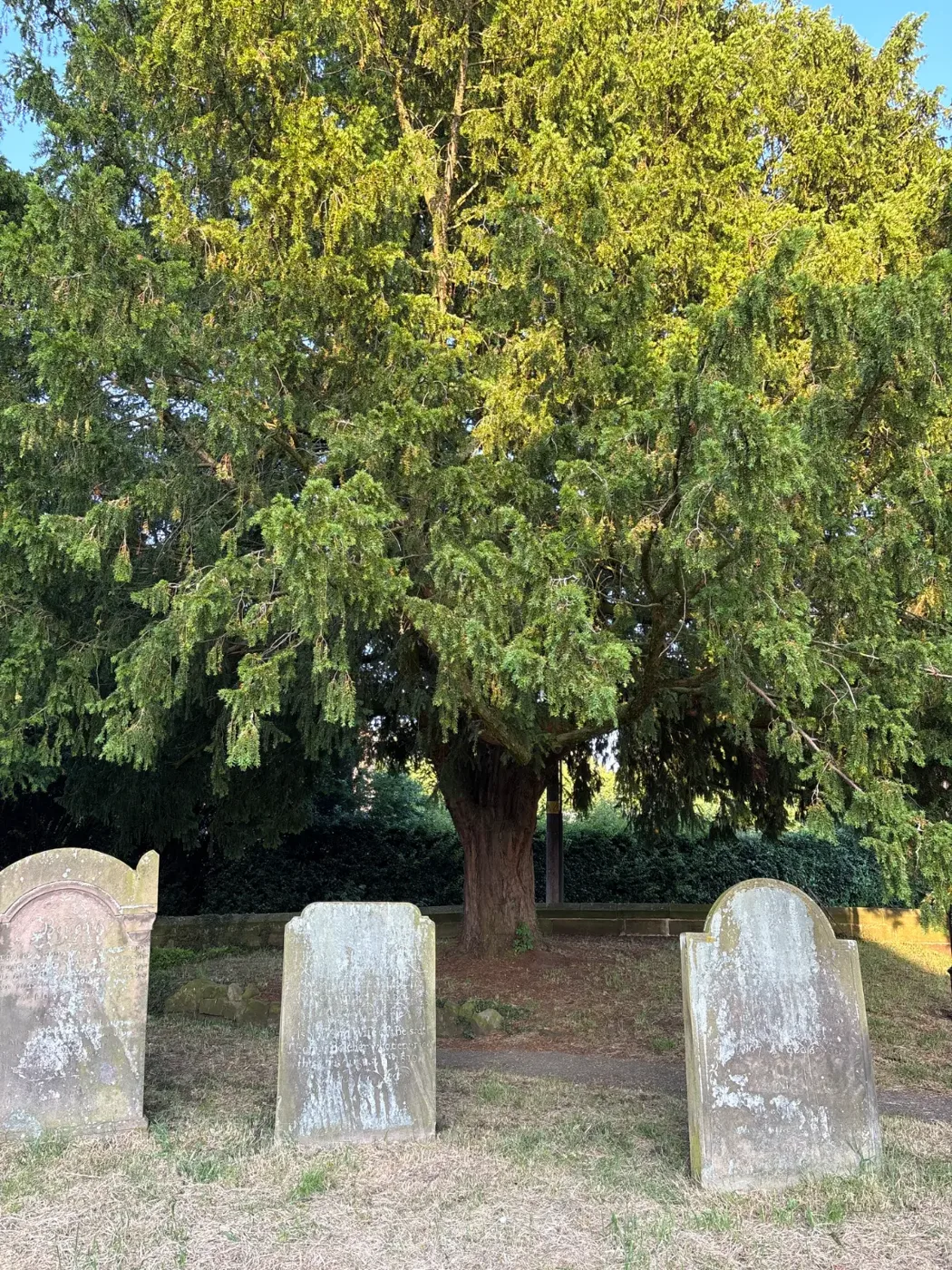
A volunteer project that wants to record every mature and ancient tree in the parish of Gnosall launched on Sunday 11 October at St Lawrence Church, with the yew in the churchyard as its first ceremonial measurement.
Updated 14 October: the project’s live counter now shows 55 trees, up from 53 on 6 October. One of the two new records is a second yew, logged on 9 October with a girth of 300cm and an estimated age of about 400 years; the other is an oak of 290cm, put at 116 years. The project has not yet published the churchyard yew’s measurement from the launch, and we will add it when it does.
The Big Gnosall Tree Count asks residents to log trees on their smartphones: the species, location, girth and estimated age. Its founder, Chris Haycock, says the aim is to be “the first in the UK to record every mature and ancient tree” in a single parish, “for future generations”.
The launch
“We have chosen a particularly fitting place to begin, Gnosall’s 12th Century church,” Mr Haycock said. “Following a short launch inside the church, we’ll head into the churchyard to measure and record its ancient yew. Members of the community will then be encouraged to get involved and help us record Gnosall’s notable, mature and ancient trees.”
The launch was by invitation only. It brought together residents, community groups, councillors and invited civic representatives, with community representatives taking part in the first ceremonial measurement, followed by refreshments.
- When: Sunday 11 October 2026, 4pm to 5pm
- Where: St Lawrence Church, Gnosall
- What: a short launch in the church, then the yew is measured in the churchyard; refreshments afterwards
- Who: invited guests only
Corrected 7 October: the launch is by invitation only, not open to the public.
Why count trees at all
“The Tree Count is about more than producing a database,” Mr Haycock said. “We want people to look a little more closely at the landscape around them, discover the stories behind some of our oldest trees, and create a record that can help us understand and protect this part of Gnosall’s natural heritage for the future.”
The project’s own site puts it more bluntly. “Some of the oldest living residents of Gnosall have no voices,” it says. “They’ve witnessed wars, harvests, generations of families and changing landscapes, yet many have never been recorded. We’re going to change that.”
Its project page lists four aims: to map and preserve important trees, support biodiversity and green infrastructure, provide real data to support environmental decisions, and raise awareness of how vital mature trees are to the community. “But here’s the thing,” it adds, “we don’t even know where they all are.”
How far it has got
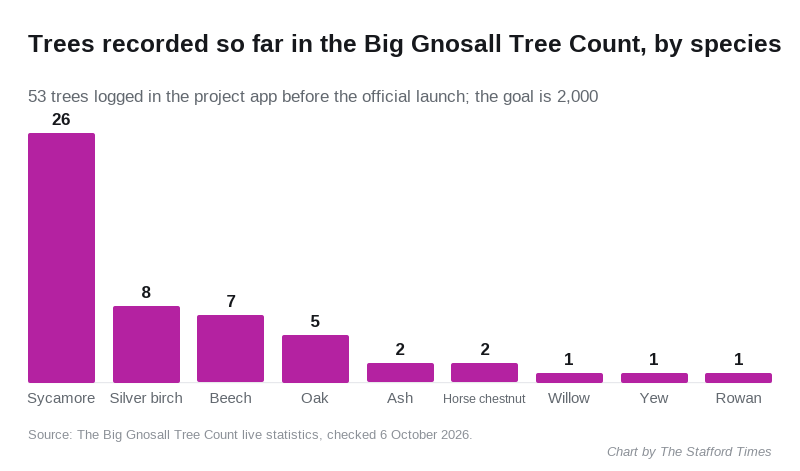
The app has been in use since January, ahead of the official start on 11 October. When we checked the project’s live statistics on 6 October, it showed 53 trees recorded against a goal of 2,000, about 3% of the way there. The figures, all from the project’s own counter:
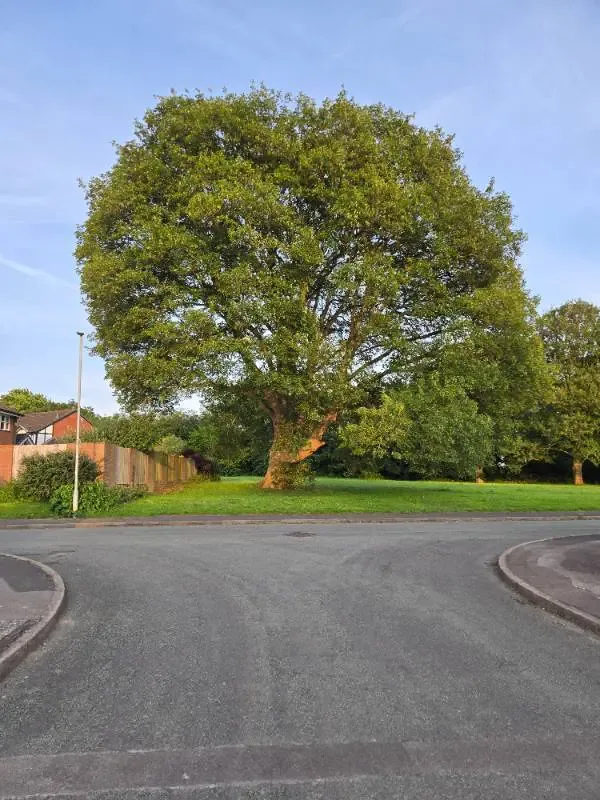
- 9 species so far, led by sycamore (26 trees), silver birch (8), beech (7) and oak (5)
- 33 trees classed as veterans, with an average estimated age of 121 years
- the oldest is a yew estimated at 405 years, with a girth of 304cm
- the largest is a sycamore with a girth of 440cm, estimated at 293 years
The ages are the app’s estimates, worked out from each tree’s species and trunk size, not a ring count. The project names central Gnosall as the area with the fewest records so far.
How to take part
The recording tool is a free web app, installed from bigtreecount.com rather than an app store, and it works offline. You need a free account to record a tree. In the project’s words: “When you spot a mature or ancient tree, log its location, snap a photo, note the girth (the tree, not yours), and let the app do the rest.” It uses the phone’s GPS to place the tree and estimates the age itself.
The volunteer rules are short. “If the tree is on public land, measure away. If it’s on private land but visible from the street, a little educated guesswork is fine (no trespassing, please, not even for that magnificent beech behind someone’s hedge).” No smartphone? The tree map shows what has been found so far.
The project is also preparing a Big Tree Explorer Pack, with a rope pre-marked for girth measurements, a waterproof notebook and an illustrated guide. Its page lists it at £9.95 and marks it “coming soon”.
What it means for you
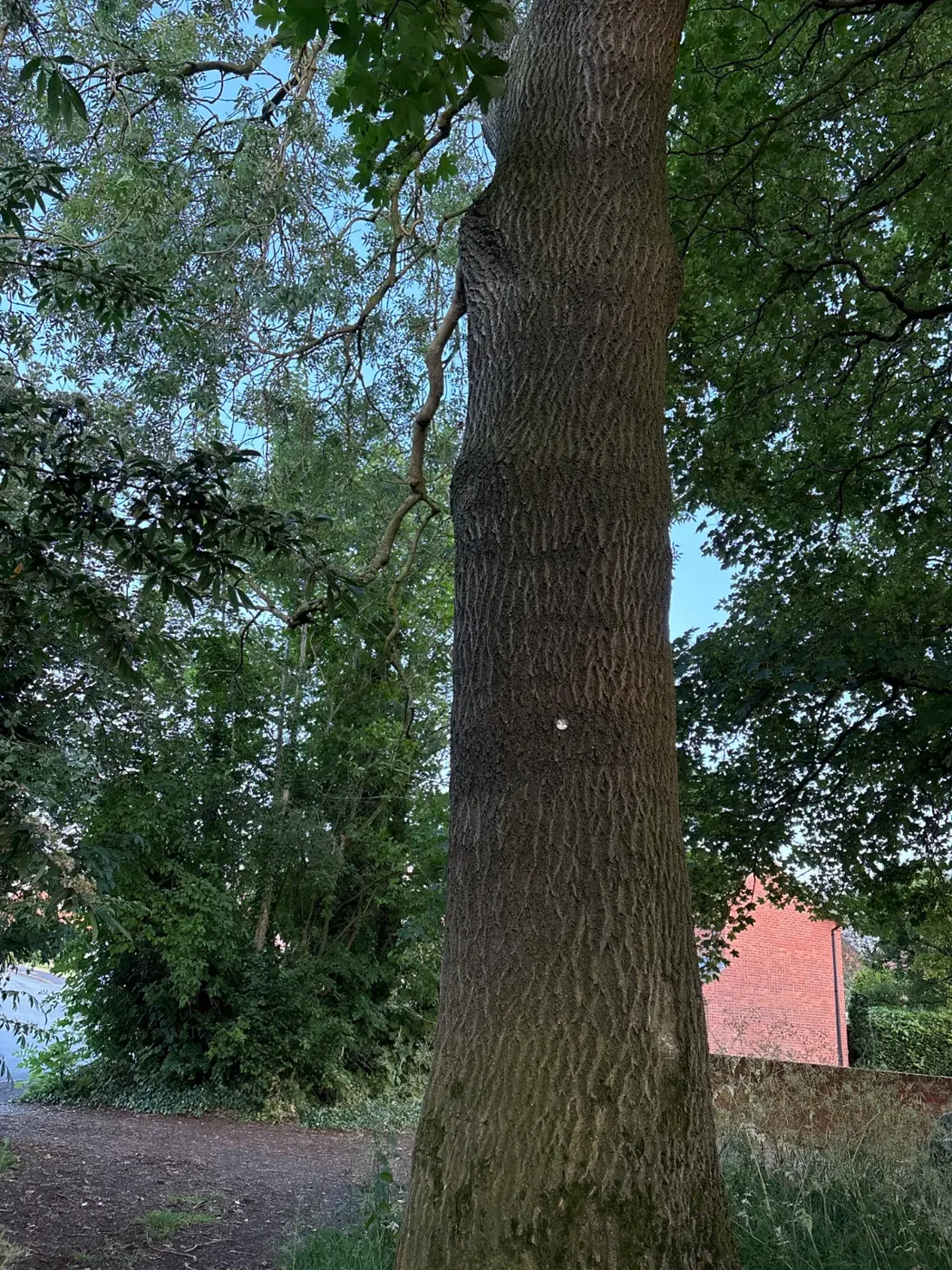
The launch was for invited guests, but if you live in Gnosall parish you can record the trees on your own walks now: the count needs 1,945 more to hit its target. The project’s blog also explains Tree Preservation Orders, the main legal protection for an important tree, if there is one near you you are worried about.
More on what is happening across the borough is in our What’s On in Stafford listings.
Have your say